General pest control serves as an active barrier strategy designed to stop crawling arthropods before they establish interior nesting colonies. Unlike single-species remediation such as subterranean termite baiting or…
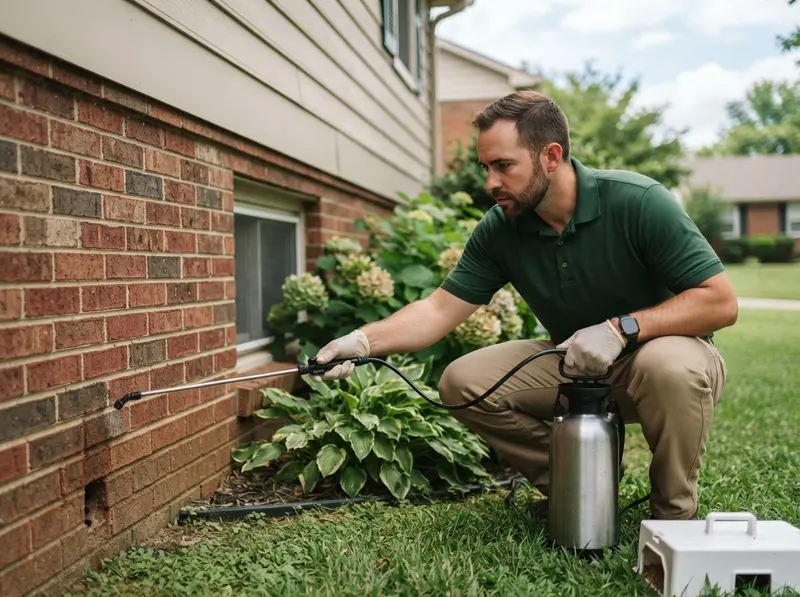
General pest control serves as an active barrier strategy designed to stop crawling arthropods before they establish interior nesting colonies. Unlike single-species remediation such as subterranean termite baiting or wood-boring beetle fumigation, general perimeter treatments manage broad seasonal pressures. In valley microclimates near the Tennessee Valley Authority reservoir system, high relative humidity regularly drives foraging pests indoors. Structural wood and brick foundations in historic Southside and Highland Park often settle, producing expansion gaps along sill plates. The trade-off between exterior perimeter defense and interior treatment involves residual durability: exterior bands directly intercept insects traversing mulch beds, whereas interior point applications target only active harborages inside damp utility rooms, under kitchen sinks, and around basement sumps.
Effective defense requires understanding structural biology and insect behavior. According to research from the University of Tennessee Extension, outdoor perimeter treatments establish a treated zone that insects contact while searching for moisture and food. Application standards guided by the United States Environmental Protection Agency require strict adherence to product label rates to protect non-target organisms while sustaining residual stability against limestone and soil degradation. Sunridge Bug Response applies treatments compliant with regulatory directives from the Tennessee Department of Agriculture, applying microencapsulated non-repellent suspensions to exterior stem walls. This approach prevents the chemical breakdown common with cheap store-bought pyrethroids under summer sun exposure, ensuring that foraging worker ants track the formulation directly back to subterranean queens rather than scattering into wall voids.
Topographical variation in Chattanooga significantly influences structural insect migration. Limestone runoff from Lookout Mountain saturates basements and sub-floor crawlspaces throughout St. Elmo and Lookout Valley, driving high populations of smokybrown cockroaches and centipedes up through concrete foundation cracks. Riverfront humidity across North Shore, Riverview, and properties along the Tennessee Riverpark creates damp perimeter mulch beds that house dense colonies of odorous house ants. Further north in Hixson and Red Bank, properties surrounded by mixed hardwood stands face intense late-summer cricket and spider dispersion. In dense commercial and residential areas such as Brainerd and East Brainerd, plumbing voids and sewer access points provide constant subterranean entry pathways that require targeted spot treatment around pipe collars rather than uncoordinated aerosol fogging.
Safe and durable pest intervention relies on structural physics and mechanical exclusion. Technicians examine weatherstripping along door sweeps, attic venting screens, and weep holes in brick veneers, applying non-staining formulations precisely where pests cross the thermal boundary. Guidelines supported by the National Pest Management Association emphasize that integrated pest management minimizes chemical exposure to children and pets by securing products within concealed voids and dry perimeter bands. Sunridge Bug Response relies on verified diagnostic inspections to establish physical pest barriers that remain effective across fluctuating mountain rainfall patterns.
Every job gets a firm, written price after a free on-site visit.
Tell us about your general pest control job in Chattanooga and we'll send a clear, written quote, usually the same day.
 Sunridge Bug Response