Flea and tick defense requires an integrated barrier approach rather than a standard general pest spray. Fleas complete their life cycle across four distinct stages, egg, larva, pupa, and adult, meaning surface contact…
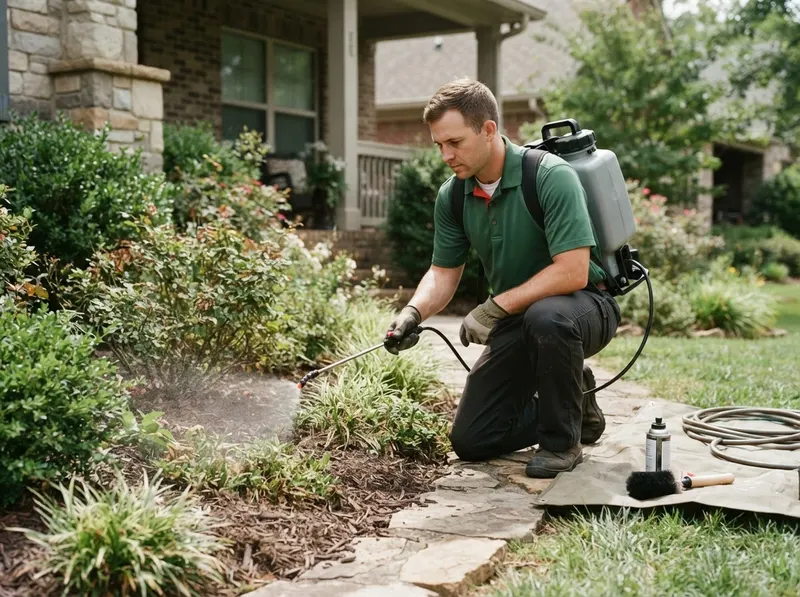
Flea and tick defense requires an integrated barrier approach rather than a standard general pest spray. Fleas complete their life cycle across four distinct stages, egg, larva, pupa, and adult, meaning surface contact sprays alone leave dormant pupae protected inside silken cocoons. To interrupt this development, protocols must combine adulticides with an EPA registered pesticide containing an insect growth regulator (pyriproxyfen or novaluron) that prevents immature larvae from molting. Exterior defense centers on ecotone transitions where manicured lawns border dense woodlots, heavy brush, and decorative mulch beds. According to the Centers for Disease Control and Prevention, blacklegged ticks and lone star ticks quest on tall vegetation rather than dropping from trees, making focused perimeter residual bands along fence lines and shaded turf crucial for sustained reduction.
Microclimates across Hamilton County heavily dictate infestation severity and application methods. Properties set against the base of Lookout Mountain or along the shaded footpaths of the Tennessee Riverpark encounter elevated tick counts due to frequent transit by white-tailed deer and wild rodents. In historic, tightly platted neighborhoods like St. Elmo, Highland Park, and the Southside Historic District, shaded crawl spaces and older hardwood floor gaps act as micro-reservoirs where flea pupae survive between seasons. Suburban tracts in Hixson, East Brainerd, and Lookout Valley frequently present larger grassy exposures and damp drainage swales that demand specialized power-mist distribution to penetrate dense tall fescue and zoysia root thatch down to the moist soil level where flea larvae feed on organic debris.
Inside living quarters, defense protocols require coordination between property managers, homeowners, and veterinary prescriptions. While an anxiety and depression standard of mental relief follows rapid bug elimination, long-term safety depends on rigorous chemical stewardship. Property owners must vacuum all carpets, rugs, and furniture thoroughly before application to stimulate dormant pupae to emerge into the treated zone, disposing of the vacuum canister contents immediately outside. Children and family pets must remain off treated interior and exterior surfaces until liquid mists dry completely, typically 2 to 4 hours under normal humidity conditions documented by the National Weather Service Morristown Office. Interior applications target baseboard perimeters, pet resting zones, and sub-rug flooring without spraying general furniture contact areas or pet bedding directly.
Understanding the trade-off between standalone yard treatments and integrated indoor-outdoor treatment plans ensures accurate budgeting. A standard exterior-only perimeter spray halts incoming ticks hitchhiking from forested perimeters, but it cannot resolve an established indoor carpet flea population fueled by pets. Conversely, interior treatments without a yard barrier leave the home vulnerable to re-infestation every time an animal steps into damp turf or leaf litter. Clear diagnostics determine whether a property requires a targeted single-zone knockdown or a dual-phase program. Sunridge Bug Response can be reached directly at (423) 205-3524 for site evaluations, or homeowners may text photos of pest activity for immediate assessment.
Every job gets a firm, written price after a free on-site visit.
Tell us about your flea and tick defense job in Chattanooga and we'll send a clear, written quote, usually the same day.
 Sunridge Bug Response